Bidspirit 拍卖 | England, 1702 – Early Letter
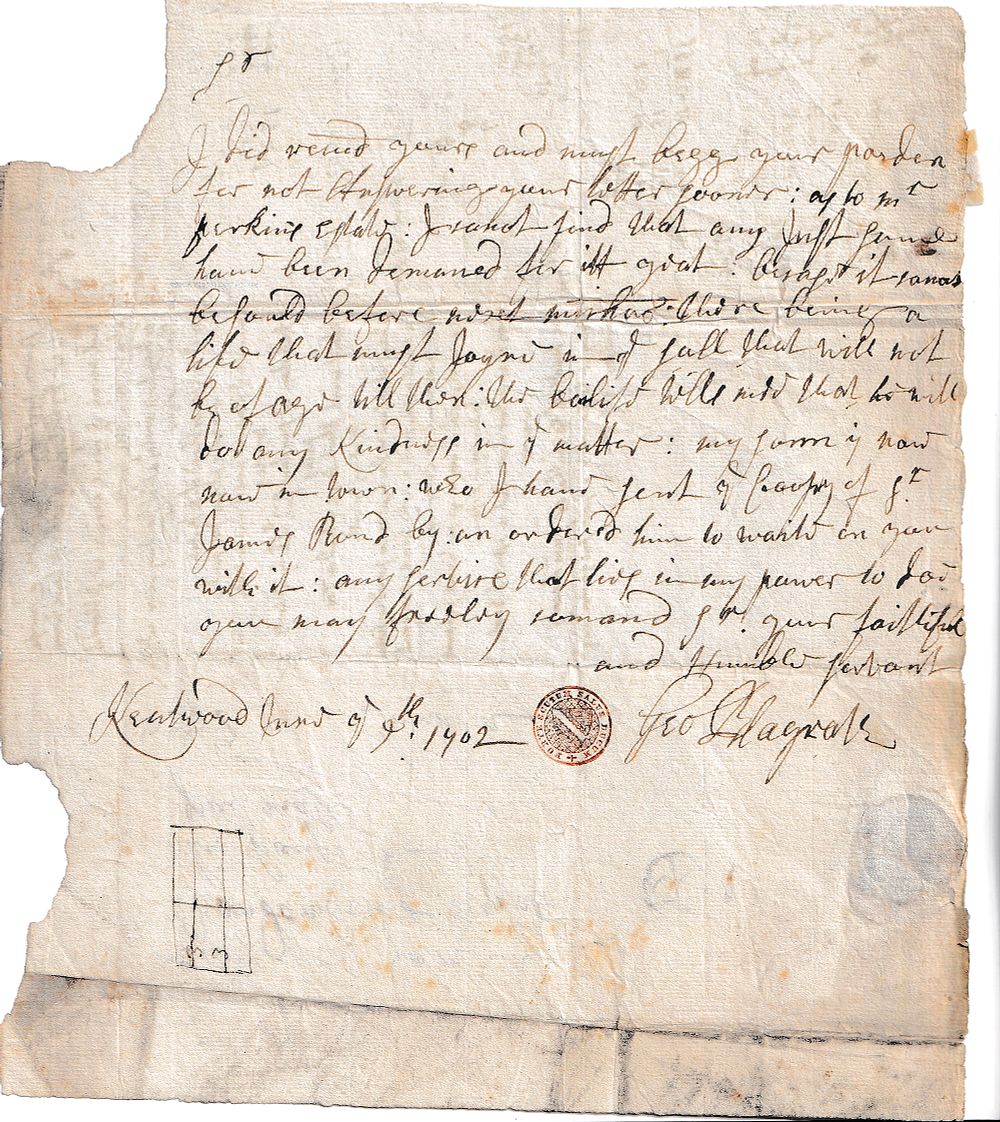
England, 1702 – Early Letter to John Vanden Bempde of Pall Mall, Ancestor of the Barons Derwent Family – Early London Bishopmark, 2d Postage, Wax Seal & Contemporary Medical Remedies on Reverse - A remarkable early English letter dating from 1702, combining early British postal history, an association with a later British aristocratic dynasty, and an unusual record of contemporary domestic medical remedies. The letter is dated: 9 June 1702 and is addressed to John Vanden Bempde Esq., at his house in Pall Mall, London. A closely corresponding contemporary address – “for John Van den Bempde Esq / att his house in Pall Mall” – is documented on another surviving piece of correspondence, strongly supporting the identification of the recipient. The manuscript contains personal and family matters and begins in part: “I did receive yours and must begg your pardon for not answering your letter sooner…” It later refers to a person named Francis, and concludes: “I am your faithful and humble servant” with the signature apparently reading Geo. Hayward. John Vanden Bempde and the Barons Derwent The recipient, John Vanden Bempde (d.1726), was a wealthy London merchant of Dutch origin and the ancestor from whom the later British Vanden-Bempde-Johnstone family derived its name. In 1707, only a few years after the present letter was written, Vanden Bempde acquired Hackness Hall in Yorkshire. Having no surviving son, he arranged for the estate to descend through his daughter Charlotte, subject to his descendants adopting the Vanden Bempde name. Through Charlotte's descendants developed the Vanden-Bempde-Johnstone family of Hackness. A baronetcy was created for the family in 1795, and in 1881 Sir Harcourt Vanden-Bempde-Johnstone was elevated to the peerage as Baron Derwent. The title and family line survive today. The present letter therefore predates Vanden Bempde's acquisition of Hackness Hall by approximately five years and is addressed directly to the man at the beginning of the family line from which the later Vanden-Bempde-Johnstones and Barons Derwent descended. Early London Bishopmark – 12 June 1702 The letter is also of considerable interest as an early piece of British postal history. The outer portion bears an early London Bishopmark, dated 12 June 1702, only three days after the manuscript itself was written. According to the earlier collector's description, the marking is a London Chief Office Type I(a) datestamp, approximately 13 mm in diameter, with sans-serif lettering, of a type used during the period 1673–1713. The postage is indicated in manuscript as 2d, corresponding with the contemporary rate for a letter travelling less than 80 miles. The item thus preserves a particularly attractive postal sequence: 9 June 1702 – letter written → 2d postage → London Bishopmark, 12 June 1702. Contemporary Medical Remedies: Of exceptional social-historical interest, the reverse was subsequently reused for handwritten medical prescriptions and remedies. The earlier collector's description identifies remedies for: worms; “waters” (probably dropsy/oedema); piles; and “stinking breath.” These annotations provide an unusual glimpse into early eighteenth-century domestic medical practice, while also illustrating the contemporary reuse of valuable writing paper after a letter had fulfilled its original postal purpose. Provenance Marks: An old red heraldic ownership stamp appears on the document. Other surviving papers of John Vanden Bempde of Hackness Hall have been recorded bearing the small red ownership stamp of the Hon. G. M. Fortescue. The stamp on the present document is related to the same provenance. An exceptional early document combining a more than 320-year-old family letter, an association with the ancestor of the Barons Derwent, early London Bishopmark postal history, 2d postage, an original wax seal and fascinating contemporary handwritten medical remedies.