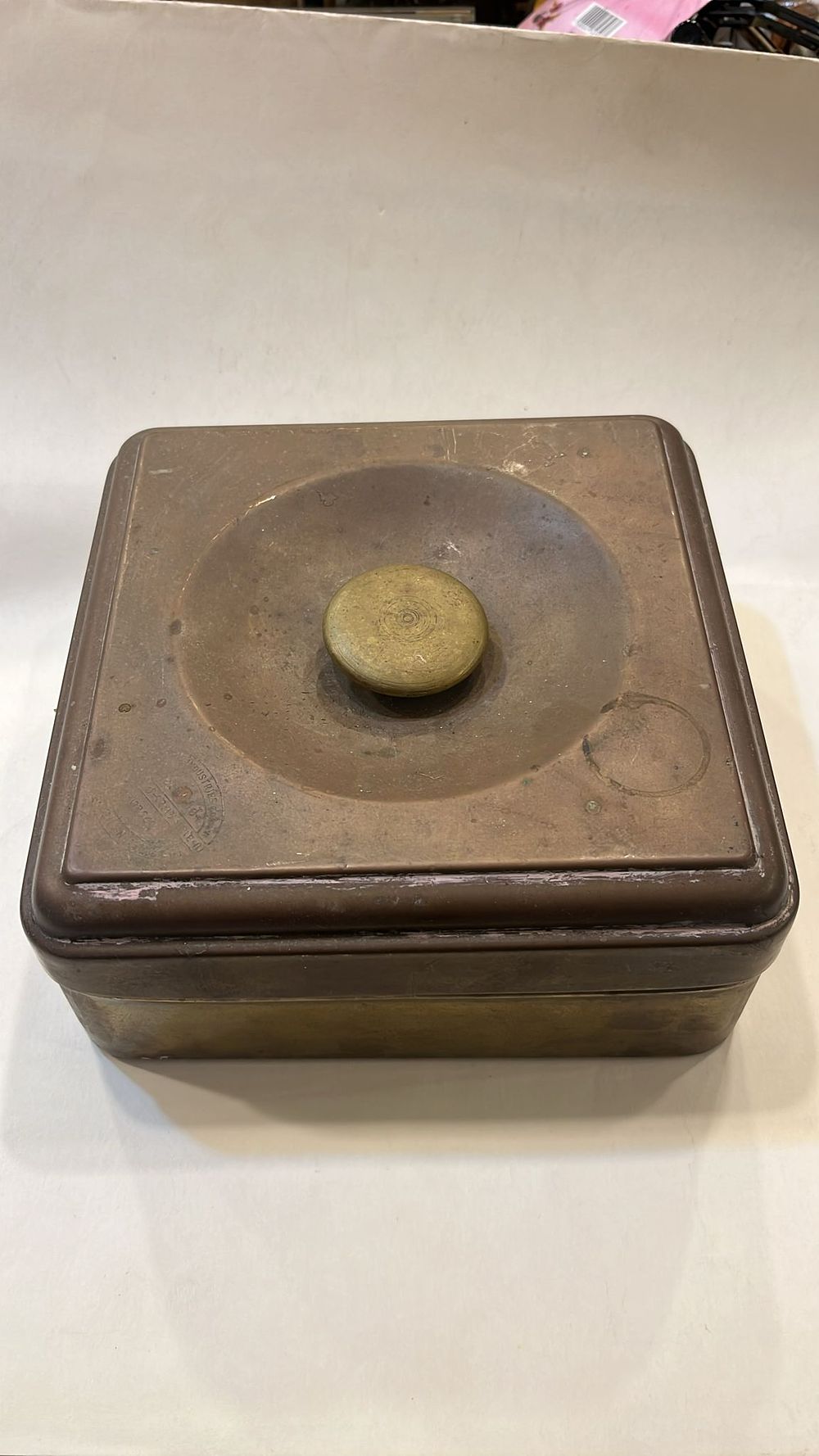
בידספיריט | A traditional Indian spice box,
A traditional Indian spice box, widely known as a Masala Dabba (or Masala Peti in Gujarati) - Gandevi, India 1930-1940 קופסת תבלינים הודית מסורתית, הידועה בשם ”מסאלה דאבה” (או ”מסאלה פטי” בגוג'ראטית) – גנדבי, הודו, 1930–1940. - קופסת תבלינים הודית מסורתית, הידועה בשם ”מסאלה דאבה” (או ”מסאלה פטי” בגוג'ראטית) – גנדבי, הודו, 1930–1940. העיצוב כולל 9 תאים: בעוד שקופסאות תבלינים ביתיות סטנדרטיות רבות הן עגולות ומכילות 7 סוגים (הידועות כ”סאט דאבה”), גרסאות מרובעות אלו – הכוללות 9 מכלים נשלפים – תוכננו בקפידה כדי להכיל מגוון רחב יותר של תבלינים שלמים וטחונים, דבר החיוני לבישול הודי אזורי ומורכב. הטקסט מכיל שילוב של אנגלית וגוג'ראטי: טקסט אנגלי (טבעת חיצונית): RELIANCE INDUSTRIES, GANDEVI לאורך הגבול העליון ו-REGD. עיצוב מס. 117268 לאורך התחתית. טקסט גוג'ראטי (מרכז):રજીસ્ટર ડીઝાઇન (עיצוב רשום)રીલાયન્સ ઇન્ડસ્ટ્રીઝ ગણદેવી (Reliance Industries Gandevi)નં. ૭૨૬૮૭ (מס' 72687) הקשר היסטורי בעוד שהשם Reliance Industries מקושר כיום ברחבי העולם לתאגיד רב-תעשייתי עצום שנוסד על ידי סימון פליז עתיק זה, המקושר לשם ”דהירובאי אמבאני” (Dhirubhai Ambani), מצביע למעשה על חברת מתכת היסטורית מקומית ונפרדת לחלוטין, שמקום מושבה בגנדבי – עיירה במחוז נבסארי שבמדינת גוג'ראט, הודו. באמצע המאה ה-20, שימש אזור גוג'ראט (ובמיוחד מקומות כמו ג'מנאגאר, בילימורה וגנדבי) כמרכז משגשג לייצור מסורתי של חלקי פליז, כלי בית ומוצרי פרזול. חותם זה שייך לבית מלאכה תעשייתי מקומי מאותה תקופה, אשר רשם את העיצובים הספציפיים שלו – בין אם פונקציונליים ובין אם אסתטיים – אצל הרשויות תחת מספרי העיצוב הרשומים המופיעים כאן. המכסה הכפול: זוהי בחירה הנדסית מכוונת. המכסה הפנימי, השטוח והפשוט, משמש כמחסום פונקציונלי השומר על המכלים סגורים היטב ומונע מהתבלינים להישפך או להתערבב בעת הזזת הקופסה. המכסה החיצוני – העשוי פליז, כבד יותר ובעל עיטורים – מספק איטום מבני איתן ומשמש כידית אחיזה. הציפוי הפנימי (Kalai): החלק הפנימי והמכלים הבודדים מצופים בבדיל (תהליך מסורתי של גימור מתכת בהודו, הידוע בשם ”Kalai”). פליז טהור מגיב ללחות, חמיצות ולאוויר ועלול לפגוע במזון . ציפוי בשכבה דקה של בדיל יוצר שכבת הגנה פנימית בטוחה לחלוטין, שאינה מגיבה כימית ומתאימה למגע עם מזון. הודות לחותמת היצרן של בית המלאכה המקומי ”Reliance Industries” בגנדבי (Gandevi), קופסה זו מהווה דוגמה נפלאה לעיצוב תעשייתי-שימושי הודי מאמצע המאה ה-20. היא משקפת תקופה שבה בתי מלאכה מקומיים למתכת בגוג'ראט שילבו בין פטנטים מסחריים מודרניים לבין מסורות מטבח עתיקות-יומין A traditional Indian spice box, widely known as a Masala Dabba (or Masala Peti in Gujarati) - Gandevi, India 1930-1940 The design F eatures 9 Compartments: While many standard household spice boxes are round and hold 7 varieties (saat dabba), square versions with 9 removable canisters were meticulously crafted to hold an extended array of whole and ground spices—essential for complex regional Indian cooking The text contains a combination of English and Gujarati:English Text (Outer Ring): RELIANCE INDUSTRIES, GANDEVI along the top border, and REGD. DESIGN NO. 117268 along the bottom.Gujarati Text (Center):રજીસ્ટર ડીઝાઇન (Registered Design)રીલાયન્સ ઇન્ડસ્ટ્રીઝ ગણદેવી (Reliance Industries Gandevi)નં. ૭૨૬૮૭ (No. 72687)Historic ContextWhile the name Reliance Industries is globally associated today with the massive multi-industry conglomerate founded by Dhirubhai Ambani, this vintage brass mark actually points to a completely separate, local historic metalworks company based in Gandevi, a town in the Navsari district of Gujarat, India. During the mid-20th century, Gujarat (particularly areas like Jamnagar, Bilimora, and Gandevi) served as a thriving hub for traditional brass parts, utensils, and hardware manufacturing. This stamp belongs to a local industrial workshop from that era that registered its specific utility or aesthetic designs with the government under the registered design numbers shown The Double Lid: This was a deliberate engineering choice. The plain inner flat lid acts as a functional barrier to keep the canisters tightly covered and prevent individual spices from spilling or mixing when the box is moved. The heavier, decorative outer brass lid provides a robust structural seal and a visual handle.The Tin Lining (Kalai): The interior and individual canisters are coated in tin (a traditional metal-finishing process in India known as Kalai). Pure brass reacts chemically with acidic, salty, or moist ingredients, which can spoil the food and tarnish the metal. Applying a thin layer of tin creates a completely safe, non-reactive, food-grade interior shield Because it features the maker's stamp from the local Reliance Industries workshop in Gandevi, this box is a fantastic piece of mid-20th-century Indian utilitarian industrial design. It highlights a time when local metal shops in Gujarat blended modern commercial patenting with century-old kitchen traditions