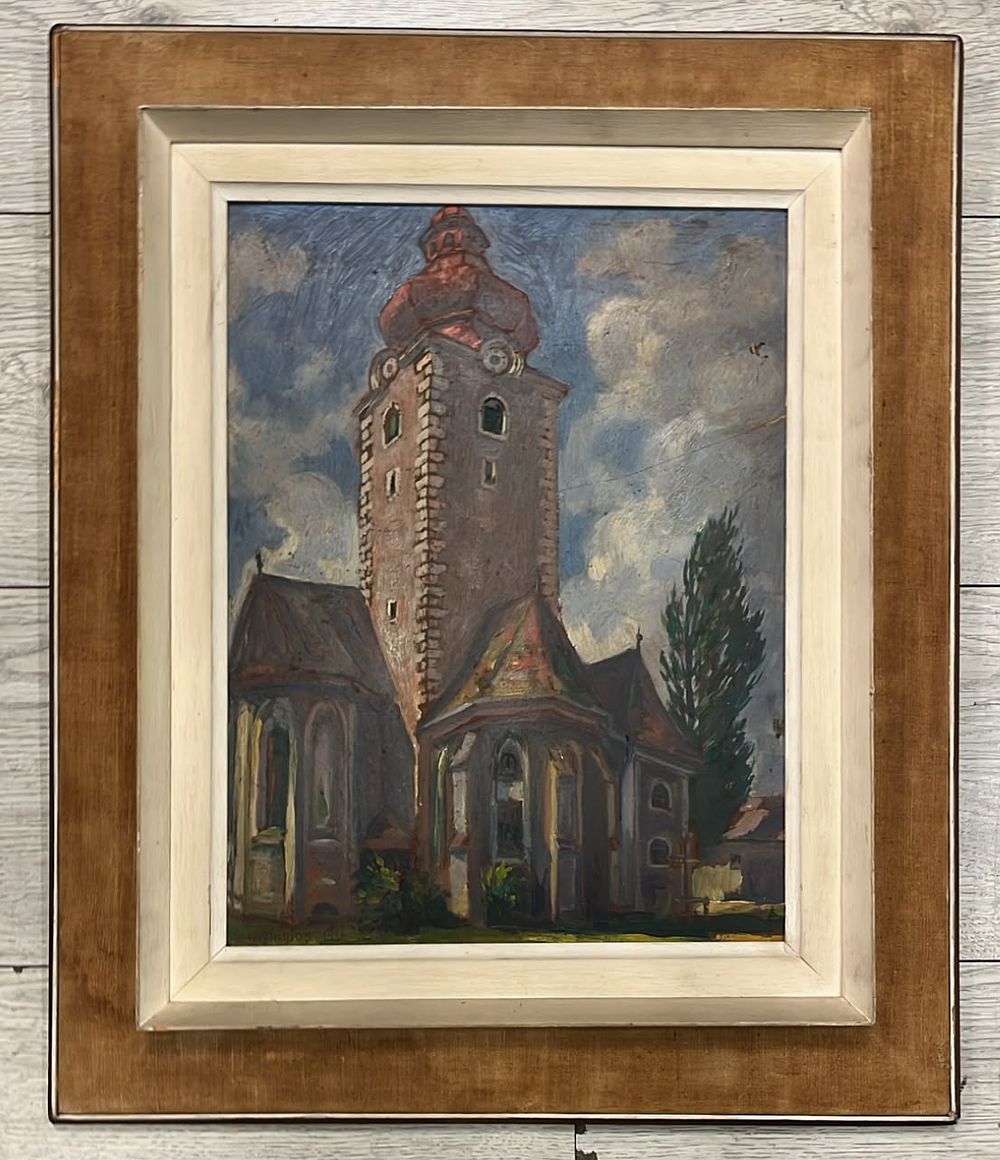
בידספיריט | אמברוז אקידוס (1894-1960) ציור שמן
אמברוז אקידוס (1894-1960) ציור שמן על עץ מקורי 1926 - ”מגדל השעון” Ambroz Akidos, original oil painting ”The clock tower” - 1926 - אמברוז אקידוס (12 באוקטובר 1894 – 9 בנובמבר 1960) היה צייר ואמן נוף בעל הכשרה אקדמית. הוא נולד באודסה (בתחומי אוקראינה של ימינו), אך את המחצית השנייה של חייו העביר בעבודה במרכז אירופה, שם הפך לדמות בולטת באמנות הסלובקית של המאה ה-20. ראשית דרכו והכשרתו האמנותית: אקידוס החל את הכשרתו האמנותית הפורמלית באקדמיה לאמנויות יפות באודסה. במהלך לימודיו הושפע עמוקות מזרם הריאליזם הרוסי – ובמיוחד מיצירותיהם של איליה רפין, וסילי סוריקוב וסטניסלב ז'וקובסקי. הוא למד אצל דמויות בולטות באזור, בהן הצייר הפיגורטיבי ג. פופוב ואמן הנוף ק. לדיז'נסקי, לצד מדריכים איטלקים בשם יוריני וקונסטנדי. מסעות והשפעות באירופה: לאחר הכשרתו הראשונית, הרבה אקידוס לטייל ברחבי מערב ומרכז אירופה, וחי ועבד באיטליה, בשווייץ, בצרפת ובאוסטריה. במהלך שהותו בווינה נחשף למודרניזם ול-אקספרסיוניזם המערביים, וחקר לעומק את יצירותיהם של אוסקר קוקושקה, מארק שאגאל ואלבין אגר-לינץ. השילוב וההפריה ההדדית בין הריאליזם הרוסי לבין האקספרסיוניזם המערב-אירופי עיצבו במידה רבה את סגנונו הבוגר. Ambróz Akidos (October 12, 1894 – November 9, 1960) was an academic painter and landscape artist. Born in Odesa (in modern-day Ukraine), he spent the latter half of his life working in Central Europe, ultimately becoming a noted figure in Slovak twentieth-century art. Early Life and Artistic Education Akidos began his formal art training at the Academy of Fine Arts in Odesa. During his studies, he was deeply influenced by the Russian realist movement—particularly the works of Ilya Repin, Vasily Surikov, and Stanislav Zhukovsky. He trained under prominent regional figures, including the figurative painter G. Popov and the landscape artist K. Ladiženskij, alongside Italian instructors Iorini and Constandi. European Travels and Influences Following his early education, Akidos traveled extensively across Western and Central Europe, living and working in Italy, Switzerland, France, and Austria. While spending time in Vienna, he exposed himself to Western modernism and expressionism, closely studying the works of Oskar Kokoschka, Marc Chagall, and Albin Egger-Lienz. This cross-pollination of Russian realism and Western European expressionism heavily defined his mature style.