Bidspirit auction | Four Issues of Bnei Akiva
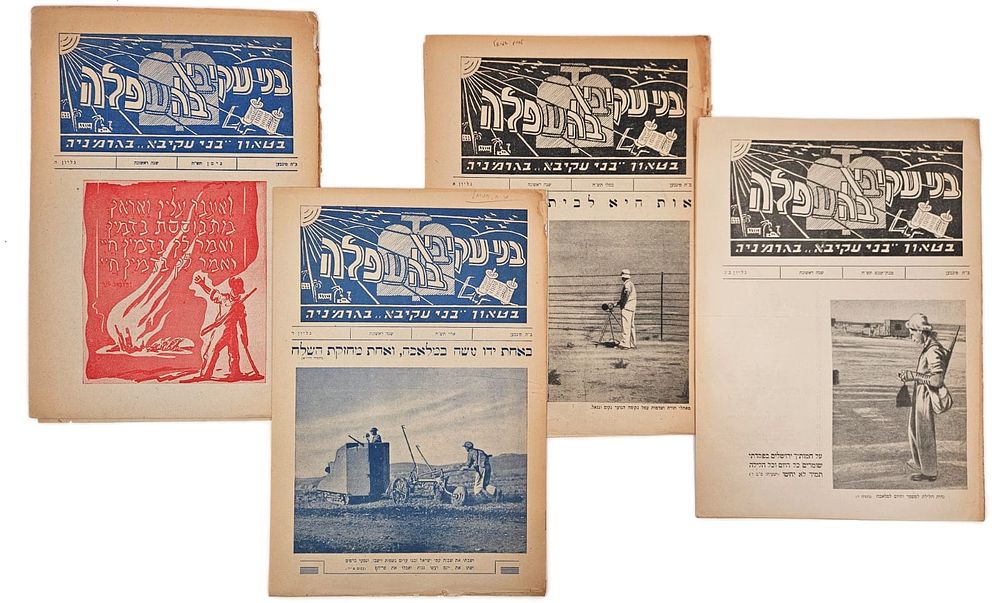
Four Issues of Bnei Akiva BeHa’apala – The She’erit Hapletah in Germany – 1948 - Four Rare Issues of Bnei Akiva BeHa’apala – the Bnei Akiva periodical in Germany, Munich, 1947–1948. The issues feature photographs and reports from the DP camps, training kibbutzim, and clandestine immigration to Eretz Israel – real-time documentation of young Holocaust survivors preparing to leave Europe and build their lives in Eretz Israel. Hebrew and Yiddish. Rare. Enclosed: “The Thirteen Principles of Bnei Akiva” certificate – membership certificate (blank, with no details filled in), issued by the Bnei Akiva organization in Germany, Central Leadership. Bnei Akiva BeHa’apala – the periodical of Bnei Akiva in Germany. Four issues from the first year: Kislev, Tevet–Shevat, Adar, and Nisan 5708. Hebrew and Yiddish. The periodical was printed for members and students of Bnei Akiva in the DP camps and training kibbutzim in Germany, at a time when the movement had become one of the principal frameworks for religious youth among the She’erit Hapletah. Many of the young people gathered and educated by the movement passed from rescue institutions to the DP camps, and from there, via the clandestine immigration routes – sometimes through the detention camps in Cyprus – to Eretz Israel. The issues vividly reflect the world of the young She’erit Hapletah who belonged to the Bnei Akiva movement in Germany – agricultural training, Torah and Hebrew study, life in the groups and kibbutzim, news from Bnei Akiva branches and DP camps, preparations for immigration, and reports from Eretz Israel. They are illustrated with numerous photographs of movement members in Germany – youth groups, assemblies, training groups, and agricultural work. The issues were produced within the survivor community itself, during the transitional period between the end of World War II and the establishment of the State of Israel. They document a young generation that remained in Europe after the war, yet rapidly succeeded in reorganizing its life around Torah and labor, training, kibbutz life, and immigration to Eretz Israel. Four complete issues. Overall condition: good. Age stains, tears, and minor defects along the edges and folds.